FREQUENTLY ASKED QUESTIONS ABOUT MODERN HOUSE ARCHITECTURE DESIGN
Good design is not about superficial beauty. It's about ensuring your home gets sufficient natural light and cross ventilation, stays cool during summers and offers you privacy from your neighbors. Often, design is about balancing a number of contradictions and tradeoffs. This is particularly true in India, because the plots are often small. Make sure you are thinking about how your family actually lives. Also, consider your actual budget, and the orientation of your plot.
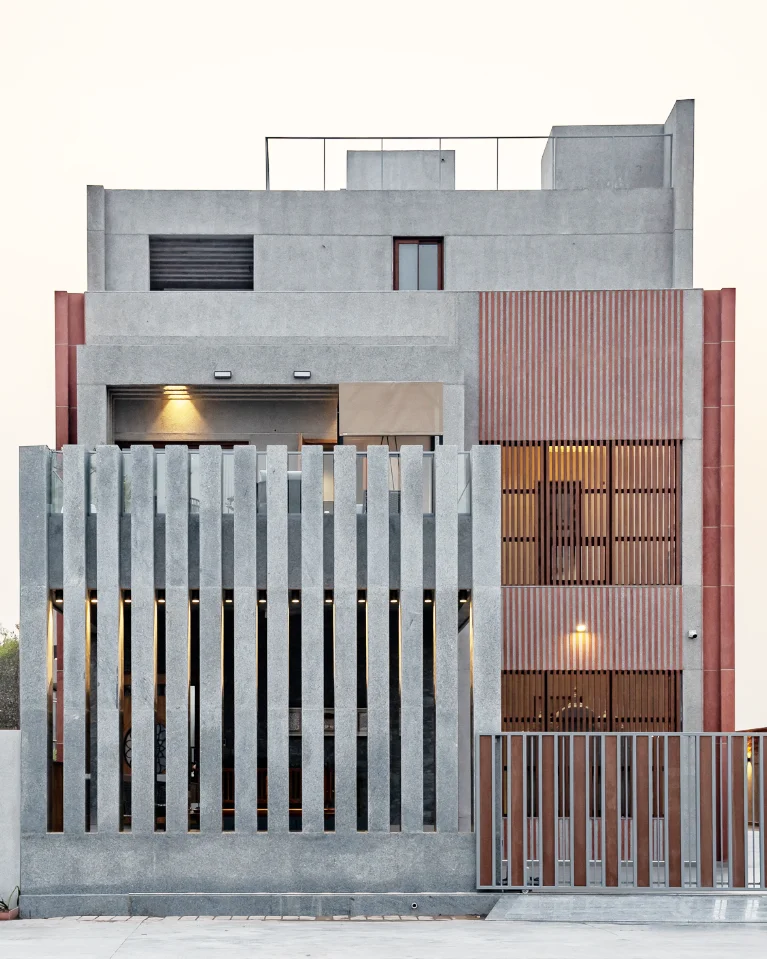
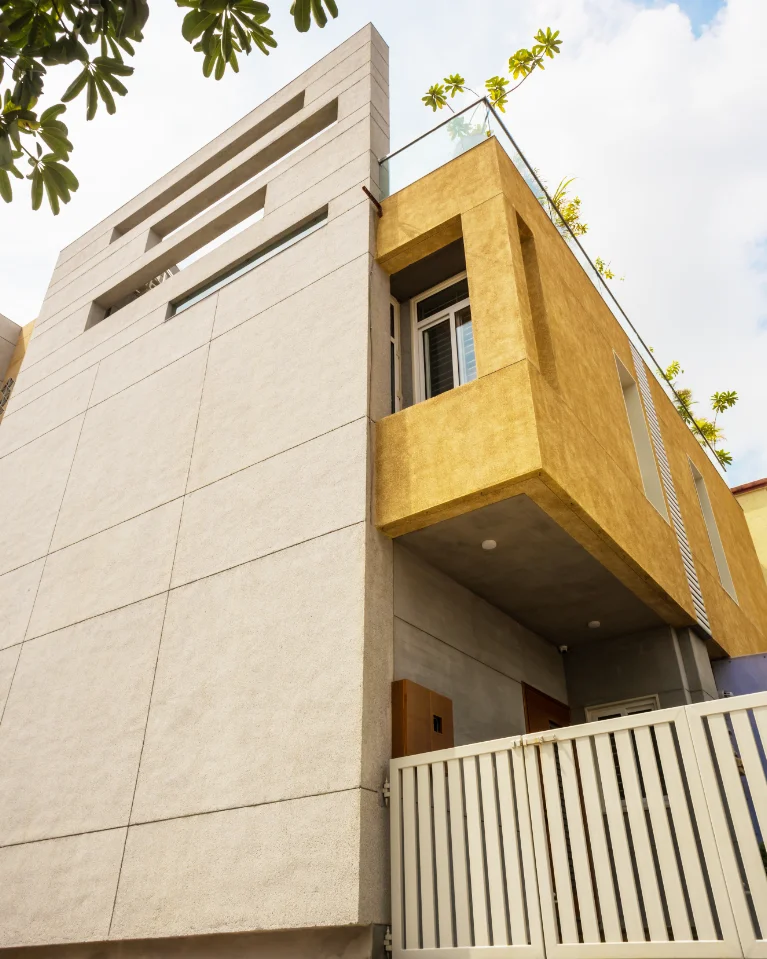
There are many architects that share images on Instagram and Pinterest. Please take a look at our built projects. Design is an art, and architecture is the built representation of that art. You need to see what is built, not what looks good on paper. Our images show actual houses, built on actual plots in India using actual materials. It gives a sense of what works for the site in relation to your preferences.
Don't try to create elevations that are too complicated. Simplicity is key. Use a limited number of good materials. A practical and efficient layout can be complemented with good use of glass and building materials.
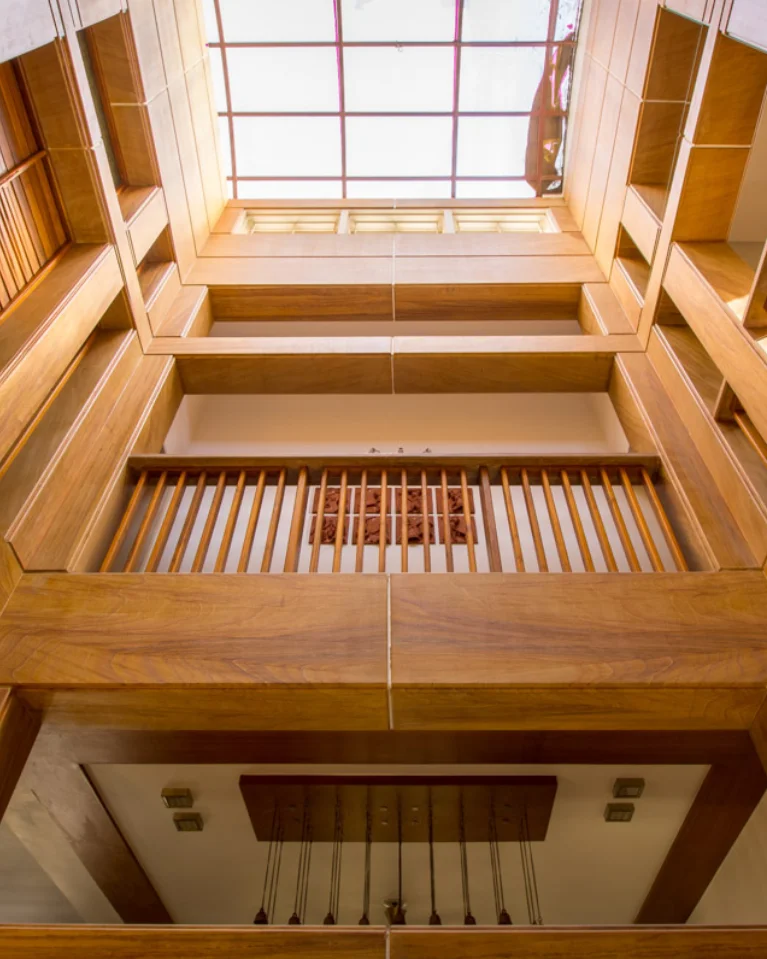
A regular modern home is built to be clean and efficient in its use of space. A luxury modern home is also built using clean lines and efficient use of space, however, it incorporates larger, more custom features, like double height spaces, inner courtyards, and seamless transitions to outdoor spaces. These personalize and enhance the use of space.
Of course. Great design is about working with the local weather conditions, and not against them. If your home is designed and oriented in the right way, natural cross ventilation helps keep your home cool, and the use of deep overhangs and window louvers, help keep the sun's heat and glare out.
Sure. As a matter of fact, modern design is more suitable for small plots as it promotes the use of open plans and tall ceilings to give the illusion of more space. Creativity in storage solutions helps maximize space and bring in as much light as possible.
It primarily depends on the built up area of your home, the materials you choose, as well as the structure of the land. Once your architect has a basic understanding of your situation, he or she should be able to give you an approximate idea.
You need to find an architect that will actually work with you to meet your design expectations and fit your budget. You'll want to look for an architect that is experienced locally, has a finished house portfolio, and is involved during the construction process.